
Vitamin D3 and K2: Benefits, Daily Intake and How to Choose
Learn how vitamin D3 and K2 support normal bone health, understand daily intake recommendations, and compare supplement labels, forms and safety considerations.
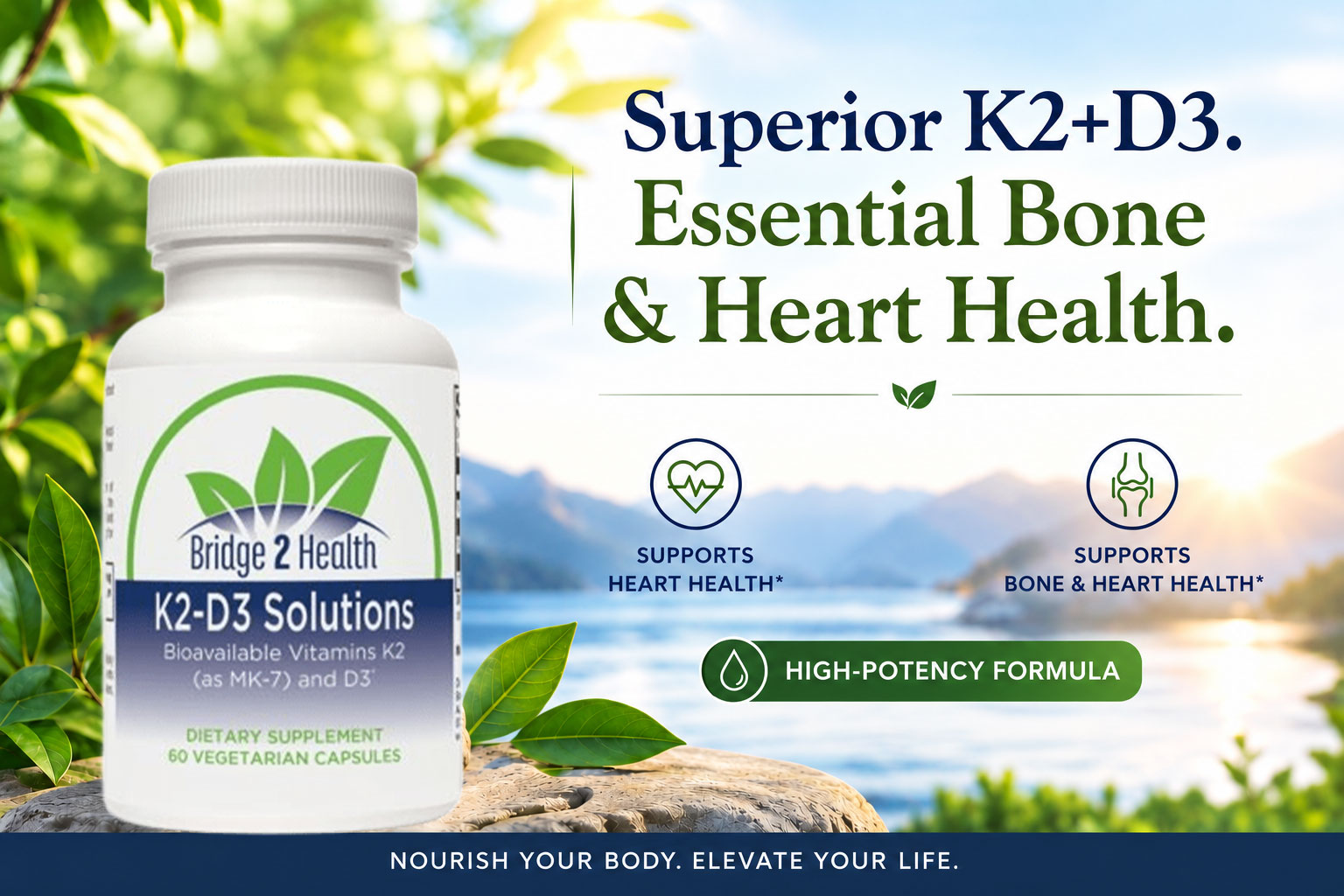
Vitamin D3 + K2: Benefits, Dosage and How to Choose
A clearer path to understanding two nutrients often paired for bone health.
Choosing a supplement should leave you feeling informed, not overwhelmed. If you have seen vitamin D3 and K2 on the same label and wondered what they do, understanding their individual roles can help you make a more informed decision.
This guide explains why these nutrients are often paired, what the available evidence tells us about their roles, how to understand daily intake recommendations, and which label details to compare before choosing a supplement.
Why Are Vitamin D3 and K2 Paired Together?
Vitamin D3 helps the body absorb calcium and supports normal bone, muscle and immune function. Vitamin K participates in normal blood clotting and helps activate proteins involved in bone metabolism. Vitamin K2 is a group of vitamin K forms that includes menaquinone-4 (MK-4) and menaquinone-7 (MK-7). [1, 2]
These different functions help explain why the nutrients are often included in the same supplement. Vitamin D supports calcium absorption, while vitamin K is involved in the activation of proteins associated with bone health.
However, their individual roles do not establish that everyone needs both nutrients in supplement form. Whether a combined D3 + K2 product is appropriate depends on a person's dietary intake, health circumstances and medications. Some people may need vitamin D supplementation without requiring a separate vitamin K2 supplement. [1, 2]
What Benefits Can You Reasonably Expect?
Support for Normal Bone Health
Vitamin D and vitamin K both contribute to processes involved in maintaining normal bone health. Vitamin D helps the body absorb calcium, while vitamin K is involved in activating proteins that participate in bone metabolism. [1, 2]
Getting enough of these nutrients is important, but taking a supplement does not guarantee stronger bones or prevent every bone-related condition. The potential benefit depends on factors such as existing nutrient intake, individual health needs and the evidence supporting the particular supplement.
People with osteoporosis or another diagnosed bone condition should follow an appropriate care plan rather than relying on a supplement alone.
Understanding Calcium Metabolism
Vitamin D promotes calcium absorption from the digestive tract. Vitamin K helps activate proteins involved in bone metabolism, including osteocalcin. These are established biological functions of the two nutrients. [1, 2]
However, these functions do not prove that taking a combined D3 + K2 supplement prevents heart disease or removes calcium from arteries. Such outcomes should not be assumed from the nutrients' roles in the body.
When comparing products, focus on the nutrients' established functions and the available clinical evidence rather than claims that go beyond what research supports.
A Simpler Supplement Routine
When a healthcare professional recommends both nutrients, a combined supplement may make a daily routine easier to manage. It can also reduce the need to take separate products.
Convenience alone, however, is not a reason to add another supplement. Consider your current diet, existing supplements, health circumstances and any medications before deciding whether a combined formula is suitable.
How Much Vitamin D3 Do Adults Need?
The recommended daily intake of vitamin D varies by age. According to the US National Institutes of Health (NIH) Office of Dietary Supplements, the recommended amounts for adults are:
Adults aged 19–70: 600 IU (15 mcg) per day.
Adults aged 71 and older: 800 IU (20 mcg) per day.
These recommendations refer to total daily vitamin D intake from food, beverages and supplements combined. They are general intake recommendations, not a prescription for a particular supplement or dose. [1]
Understanding the Upper Intake Limit
For adults, the tolerable upper intake level for vitamin D is 4,000 IU (100 mcg) per day from all sources combined. This includes food, beverages and supplements.
The upper intake limit is a safety limit for routine intake, not a recommended daily target.
A healthcare professional may recommend a higher dose for a specific medical reason, sometimes for a limited period, with appropriate monitoring. Taking more vitamin D than needed over time can lead to excessive calcium levels in the blood and may damage the kidneys. [1]
A serving containing 5,000 IU or 10,000 IU provides more than the general adult daily upper intake limit. Whether that strength and dosing schedule are appropriate should be determined with a healthcare professional.
The distinction between the amount per serving and how often a product is taken is important. A higher-strength product should not be treated as appropriate for routine use simply because it is available for purchase.
Adding vitamin K2 does not make excessive vitamin D safe. [1, 2]
What Should You Know About Vitamin K2 Dosage?
The recommended intake targets for vitamin K are based on total vitamin K intake, not a specific dose of vitamin K2 supplements.
According to the NIH Office of Dietary Supplements, the adequate intake levels for adults are:
Women aged 19 and older: 90 mcg per day.
Men aged 19 and older: 120 mcg per day.
These targets include vitamin K obtained from food and other sources. They are not specific recommendations for MK-4, MK-7 or a combined D3 + K2 supplement. [2]
No tolerable upper intake limit has been established for vitamin K. This does not mean that unlimited amounts are appropriate or that vitamin K is suitable for everyone. [2]
Understanding the Different Forms of Vitamin K
Vitamin K1, also known as phylloquinone, is found mainly in green leafy vegetables and certain vegetable oils. Vitamin K2 refers to a group of compounds called menaquinones, including MK-4 and MK-7. [2]
When comparing supplements, check which form is listed and how much the product provides per serving. The form alone does not establish that one product is universally better than another. Consider the full formulation, available evidence, serving directions and your individual needs.
Five Label Checks Before You Buy
1. Check the Amount Per Serving
Read the vitamin D3 and vitamin K amounts together. Confirm whether the label lists amounts in IU, mcg or both, and check the serving size used to calculate those amounts.
Review other supplements you take to identify overlapping ingredients and avoid unintentionally exceeding appropriate intake levels.
2. Check the Nutrient Forms
Look for a clearly identified vitamin D3 source and the specific vitamin K form, such as MK-4 or MK-7, if included.
A product name or front-label claim does not tell you the complete formula. The Supplement Facts panel provides more useful information for comparing products.
3. Understand Serving Size and Bottle Supply
Check the recommended serving size, directions for use and number of servings per container.
For example, a bottle containing 60 capsules provides 60 servings if the labelled serving is one capsule, or 30 servings if the labelled serving is two capsules.
Do not assume that the capsule count equals the number of days of supply. Follow the actual product directions and consider whether the suggested intake is appropriate for your needs.
4. Review Ingredients and Warnings
Read the complete Supplement Facts panel, other ingredients, allergy information and warnings before purchasing.
Pay attention to medication interactions and any precautions relevant to your circumstances. If the label does not clearly explain the amount per serving or directions for use, seek clarification from the manufacturer or a healthcare professional.
5. Compare Value and Quality Information
Compare the cost per serving alongside the nutrient amounts, number of servings and product directions. A lower bottle price does not necessarily mean a better value if the bottles contain different numbers of servings.
Look for transparent ingredient information and documentation supporting any stated testing or certification claims. If a product offers subscription or auto-delivery options, review the current pricing, renewal frequency, cancellation terms and conditions before enrolling.
Exploring D3 + K2 at Bridge-2-Health
If you are comparing a combined vitamin D3 + K2 supplement, start by reviewing its current Supplement Facts panel and product directions.
Check the amount of vitamin D3, the form and amount of vitamin K, the serving size, the number of servings per container and any relevant warnings. Compare those details with your existing supplement routine and the general intake guidance discussed in this article.
You can review the Bridge-2-Health D3 + K2 product page to examine the available product information.
Before choosing a supplement, consider whether the formula fits your needs and consult a healthcare professional if you are uncertain about the appropriate amount or whether you need both nutrients.
Who Should Check With a Healthcare Professional First?
People Taking Certain Medications
Vitamin K can interact seriously with warfarin and other vitamin K antagonist anticoagulants. These medicines depend on maintaining a consistent vitamin K intake for appropriate treatment.
Anyone taking these medicines should speak with the clinician managing their treatment before changing vitamin K intake or starting, stopping or changing a vitamin K supplement. [2]
Vitamin D can also interact with certain medications, including thiazide diuretics, corticosteroids and orlistat. These interactions can affect calcium levels or vitamin D absorption and metabolism. [1]
People With Existing Health Conditions
Seek professional guidance before using a D3 + K2 supplement if you have kidney disease, a condition affecting calcium levels, or another health concern that could influence your nutrient requirements.
People who are pregnant or breastfeeding should also discuss supplementation with a healthcare professional to determine their individual needs.
A clinician can help assess whether supplementation is necessary, which dose is appropriate and whether monitoring is required.
Frequently Asked Questions
Can I Take Vitamin D3 and K2 Together?
These nutrients are commonly combined in supplements because they have different roles in the body. However, not everyone needs both in supplement form. Whether a combined product is suitable depends on dietary intake, health circumstances and medications. [1, 2]
Should I Take Vitamin D With Food?
Vitamin D is fat-soluble, and taking it with a meal containing some fat may improve absorption. Follow the product's directions and ask a healthcare professional if you have questions about the best approach for your circumstances. [1]
Is a Higher Dose of Vitamin D Better?
Not necessarily. A higher amount on the label does not automatically provide greater benefits. For adults, the general upper intake limit is 4,000 IU per day from all sources combined, although a healthcare professional may recommend a higher amount for a specific medical reason. [1]
Discuss higher-strength products and their dosing schedules with a healthcare professional before use.
Does Vitamin K2 Replace Calcium or Medical Treatment?
No. Vitamin K2 is involved in normal physiological processes, including bone metabolism, but it does not replace adequate calcium intake or prescribed treatment for a diagnosed bone condition. [2]
Is MK-7 Better Than MK-4?
Neither form should be considered universally better based on the label alone. MK-4 and MK-7 are different forms of vitamin K2, and choosing between them requires consideration of the formulation, available evidence and individual circumstances. [2]
Can Everyone Take a D3 + K2 Supplement?
No supplement is appropriate for everyone. People taking warfarin or other vitamin K antagonist anticoagulants, those with certain medical conditions, and people taking medicines that may interact with vitamin D should seek professional guidance before making changes to their supplement routine. [1, 2]
Make Your Next Choice an Informed One
Choosing a vitamin D3 + K2 supplement starts with understanding what the nutrients do, how much you already obtain from your diet and whether supplementation is appropriate for your needs.
Compare the amounts and forms listed on the label, check serving directions, and consider the evidence behind the product's claims. Avoid assuming that a higher dose or a combination of nutrients automatically provides greater benefits.
If you are considering a combined formula, review the current product information and consult a healthcare professional when you need guidance on dosage, medication interactions or individual requirements.
Exploring D3 + K2 Solutions at Bridge-2-Health
If you are comparing a combined vitamin D3 + K2 supplement, start by reviewing the product's current Supplement Facts panel and directions for use.
The Bridge-2-Health product page lists K2 + D3 Solutions- Bone & Immune Support and identifies vitamin K2 as MK-7. The product image shows a bottle containing 60 vegetarian capsules, and the listed directions recommend one capsule daily or as directed by a healthcare professional.
Before choosing the product, check the exact amounts of vitamin D3 and K2 per serving, review the complete ingredient list and warnings, and consider how the formula fits your individual needs and existing supplement routine.
View the Bridge-2-Health for the available product information. Consult a healthcare professional if you are unsure whether the formula or its dosage is appropriate for you.
This article is for educational purposes only and does not replace personalized medical advice. Dietary supplements are not intended to diagnose, treat, cure or prevent disease.
References
NIH Office of Dietary Supplements: Vitamin D Fact Sheet for Consumers
NIH Office of Dietary Supplements: Vitamin K Fact Sheet for Consumers
Explore More Health Insights
Discover more evidence-based articles about nutrition, cellular health, and holistic wellness.
View All Articles